IATA AHM Compliant Fleet
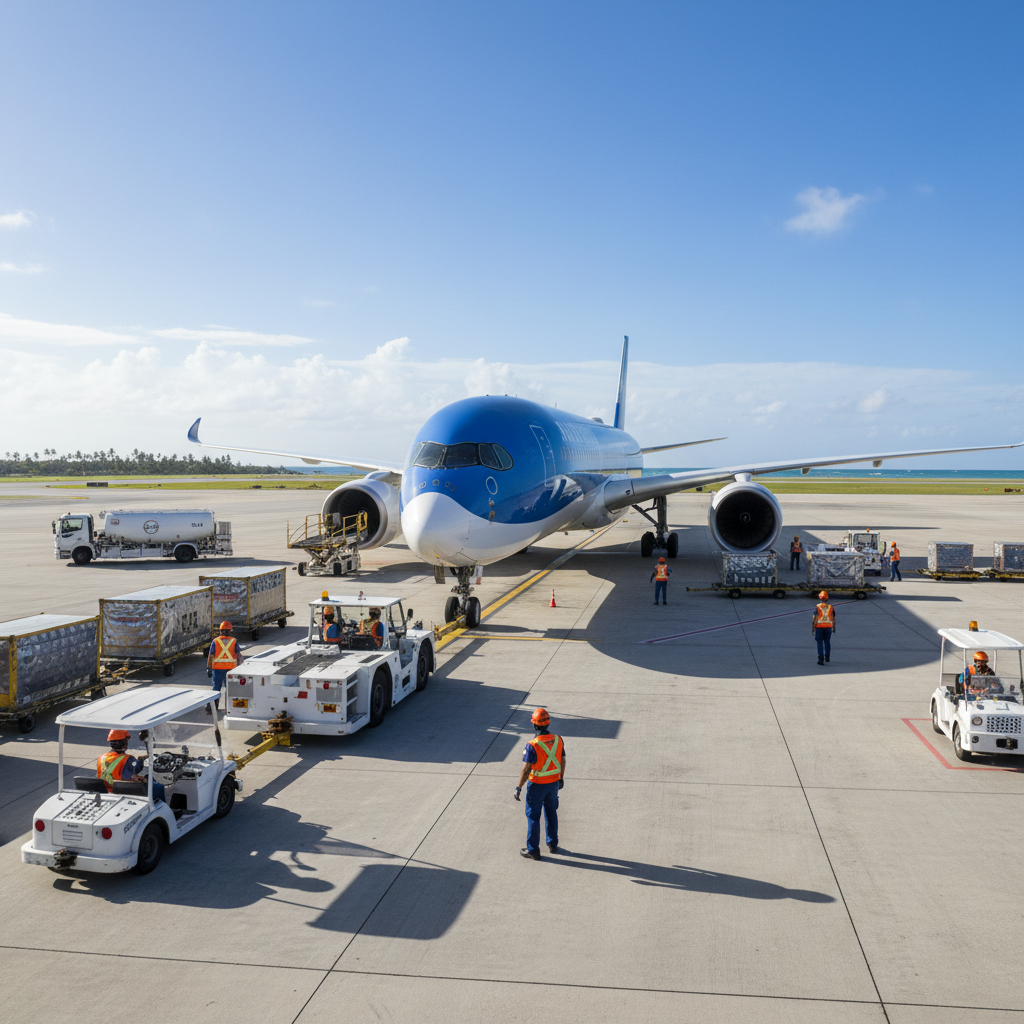
Ground Support Equipment (GSE) at Bali Airport
Complete fleet of aircraft ground support equipment for ramp operations, cargo handling, passenger services, and aircraft servicing at Ngurah Rai International Airport (DPS)
GSE Units in Fleet
Equipment Availability
Fleet Serviceability Rate
GSE Fleet Overview at Ngurah Rai Airport
Ground support equipment forms the backbone of every aircraft turnaround operation at Ngurah Rai International Airport (DPS). Without reliable, well-maintained GSE, even the most skilled ground handling team cannot deliver efficient service. Bali Ground Handling, established in 2015 as part of Juara Holding Group, operates one of the most comprehensive GSE fleets at DPS, supporting 53 airlines across international and domestic terminals.
Our GSE inventory is strategically positioned across multiple staging areas on the apron, ensuring rapid deployment to any aircraft stand within minutes of arrival. Equipment allocation is managed through our real-time operations control system, which tracks vehicle location, maintenance status, and utilization rates to maximize fleet efficiency and minimize turnaround delays. This integrated approach supports our ramp services operations.
Aircraft Movement Equipment
Aircraft movement on the ground requires specialized towing and pushback equipment rated for specific aircraft types and weights. Our fleet includes conventional towbar tractors compatible with all narrow-body aircraft operating at DPS including A320 family and Boeing 737 variants, towbarless pushback units for wide-body aircraft including B777, B787, and A330 providing faster and safer pushback operations, and aircraft tow tractors for repositioning aircraft between maintenance areas, remote stands, and parking positions.
All pushback operations are coordinated with ATC ground control and our ramp marshalling team using standardized IATA hand signals and radio communication protocols. Our pushback crews hold DGCA-issued ramp driving permits with type-specific endorsements for each aircraft category they operate.
Cargo & Baggage Loading Equipment
Efficient baggage and cargo transfer between the terminal and aircraft requires a range of specialized loading equipment. Our fleet includes belt loaders for bulk-loaded aircraft with adjustable conveyor heights matching all door sill heights, ULD (Unit Load Device) container/pallet loaders with main deck and lower deck capability for wide-body aircraft, baggage tractors and dollies for airside transport between sorting areas and aircraft positions, and cargo transporters for oversized and heavy freight items.
Loading equipment operations directly support our baggage handling and cargo handling services. All loading crews are trained in aircraft-specific loading procedures, weight and balance limitations, and damage prevention techniques. Equipment is fitted with aircraft proximity sensors and soft-touch bumpers to prevent aircraft skin damage during positioning.
Passenger Access Equipment
Not all aircraft stands at DPS are equipped with jet bridges, particularly remote stands used during peak hours and for smaller aircraft types. Our passenger access equipment includes towable passenger stairs with adjustable height for narrow-body and wide-body aircraft, self-propelled passenger stairs for rapid deployment to remote stands, ambulift vehicles for passengers with reduced mobility requiring wheelchair-accessible boarding, and VIP passenger stairs with weather canopy for premium service operations.
Passenger stairs deployment is coordinated with our passenger handling teams and VIP fast track services. During Bali’s rainy season (October-March), we deploy weather-protected boarding equipment to ensure passenger comfort during embarkation and disembarkation at remote stands.
Aircraft Servicing Equipment
Between flights, aircraft require multiple servicing operations performed simultaneously to minimize turnaround time. Our aircraft servicing GSE fleet includes Ground Power Units (GPU) providing 28VDC and 115VAC/400Hz electrical power allowing aircraft to shut down APU during ground time, reducing fuel consumption and noise. Air Start Units (ASU) deliver compressed air for engine starting, essential for aircraft with APU limitations. Potable water trucks service aircraft drinking water systems with filtered, tested water meeting aviation hygiene standards. Lavatory service vehicles handle waste removal and chemical replenishment using enclosed systems meeting environmental regulations. Air conditioning units maintain cabin temperature during ground operations in Bali’s tropical heat, critical for passenger comfort during boarding.
These servicing operations integrate with our fuel coordination and aircraft cleaning services within the overall turnaround management plan.
GSE Maintenance & Safety Standards
Equipment reliability is non-negotiable in aviation ground operations. A single GSE failure can cascade into flight delays affecting multiple airlines. Bali Ground Handling maintains rigorous preventive maintenance programs that exceed manufacturer recommendations. Our maintenance framework includes daily pre-use inspections by operators covering fluid levels, tire condition, safety devices, and operational functions. Scheduled preventive maintenance at manufacturer-recommended intervals with documented service records. Annual safety certifications for all lifting equipment, pressure vessels, and electrical systems. Real-time breakdown response with standby replacement units for critical equipment categories.
Our GSE maintenance workshop operates 24/7 with qualified technicians trained by equipment manufacturers. We maintain a strategic spare parts inventory to minimize downtime and ensure the 99.2% fleet serviceability rate our airline customers expect.
Sustainability & Electric GSE Transition
The global aviation industry is transitioning toward electric ground support equipment to reduce carbon emissions and noise pollution on airport ramps. Bali Ground Handling is actively investing in this transition at DPS, with electric baggage tractors and belt loaders already in operation and a roadmap for further electrification of our fleet. Electric GSE reduces ramp emissions by up to 90% compared to diesel equivalents, supporting both our environmental commitments and the sustainability goals of our airline partners and Bali’s tourism ecosystem.
What GSE is needed for a standard aircraft turnaround at DPS?
A standard narrow-body turnaround at Bali airport requires a minimum of 8-10 GSE units deployed simultaneously: pushback tractor, passenger stairs (for remote stands), belt loaders (2), baggage tractors with dollies, GPU, potable water truck, lavatory service vehicle, and air conditioning unit. Wide-body turnarounds require 12-15 units including container loaders and additional belt loaders. Bali Ground Handling pre-positions all required equipment before aircraft arrival.
How do you prevent GSE damage to aircraft?
We implement multiple layers of aircraft damage prevention including operator training and DGCA ramp driving permits, speed limiters on all GSE vehicles, aircraft proximity sensors and soft-touch bumpers, defined approach paths and parking positions for each equipment type, and mandatory spotter assistance for close-proximity operations. All GSE operators undergo annual competency assessments and recurrent training on damage prevention procedures.
Can you provide GSE for private jet operations?
Yes, we maintain specialized GSE for private and business aviation at DPS, including lightweight towbars compatible with Gulfstream, Bombardier, and Dassault aircraft types, compact GPU units, premium passenger stairs, and dedicated service vehicles. This equipment supports our private jet handling and charter flight support operations with discrete, premium-quality ground services.
Discuss GSE Requirements for Your Airline
Contact Bali Ground Handling for GSE fleet specifications, availability, and service level agreements at DPS.
Ground Support Equipment FAQ
What ground support equipment do you provide?
Our GSE fleet includes passenger stairs, baggage carts, belt loaders, cargo loaders, pushback tugs, ground power units (GPU), air start units, lavatory service vehicles, water service vehicles, de-icing equipment, and aircraft towing bars for various aircraft types.
Is your GSE equipment maintained to aviation standards?
Yes, all ground support equipment undergoes regular preventive maintenance following manufacturer schedules and IATA recommended practices. Equipment is inspected daily before operations and any defective units are immediately removed from service.
Can you provide GSE for private jet operations?
Absolutely. We maintain dedicated GSE for private aviation including appropriately sized passenger stairs, baggage handling equipment, ground power units, and service vehicles specifically for the General Aviation Terminal operations.
Do you offer 24/7 GSE availability?
Yes, our GSE fleet and trained operators are available 24/7 to support flight operations at any hour. We maintain backup equipment for critical items to ensure uninterrupted service even during peak operational periods.
What types of aircraft can your GSE service?
Our equipment portfolio covers narrow-body aircraft (B737, A320 family), wide-body aircraft (B777, B787, A330, A350), regional jets, turboprops, and private jets ranging from light jets to heavy long-range aircraft.
Do you provide ground power services?
Yes, we provide 28VDC ground power units and 115V/400Hz external AC power units for aircraft during ground time. This allows airlines to shut down auxiliary power units (APU) during parking, reducing fuel consumption and noise pollution.
Need assistance? Contact our team for expert support.
Email: [email protected] | Phone: +62 811 3809 193