Terminal Navigation Guide
Bali Airport Terminal Map & Gate Guide
Detailed terminal layouts, gate locations, check-in counter assignments, and airside navigation for Ngurah Rai International Airport (DPS)
International Terminal Overview
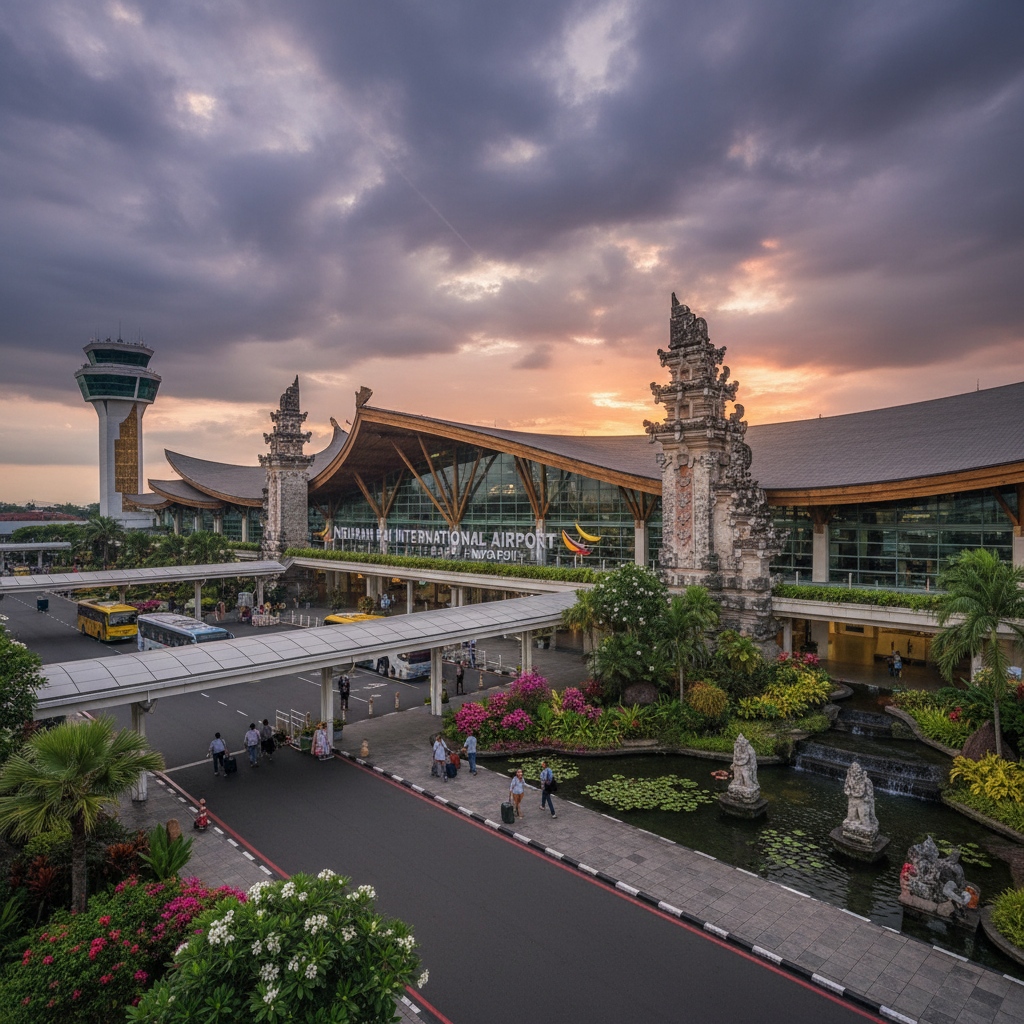
The International Terminal at Ngurah Rai Airport is a modern facility designed with traditional Balinese architectural elements, completed during the 2013 expansion project. The terminal spans approximately 65,000 square meters across three levels, processing all international departures and arrivals. The design incorporates open-air elements reflecting Balinese philosophy while maintaining modern aviation security and passenger processing standards.
The departures level (Level 2) houses check-in counters organized in island configurations, with airlines assigned specific counter ranges that may change seasonally. After check-in, passengers proceed through security screening to the immigration departure hall, then into the international departure lounge where gates 1-30 provide access to aircraft via aerobridges or apron bus transfer to remote stands. Our passenger handling teams operate throughout this terminal flow.
International Terminal — Departures Level
The departures level is organized into distinct functional zones. The check-in hall contains approximately 60 check-in counters arranged in multiple islands, with self-service kiosks available for participating airlines. Counter assignments are managed by Angkasa Pura I and allocated to airlines based on flight schedules and passenger volumes. During peak periods (morning departures to Australia, evening departures to East Asia), counter utilization is highest and group check-in for MICE events requires advance coordination.
Post check-in, the security screening zone channels passengers through multiple screening lanes with separate lanes for crew and premium passengers. The emigration hall follows security, with dedicated counters for Indonesian nationals, foreign nationals, and automated gates. Beyond immigration, the international departure lounge features duty-free retail, food courts, prayer rooms, smoking areas, airline lounges, and the VIP terminal access corridor.
International Terminal — Arrivals Level
Arriving international passengers disembark and proceed through the arrivals corridor to the immigration hall on the ground floor. The immigration hall contains approximately 40 counters divided into Indonesian passport holders, Visa on Arrival (VOA) purchase counters, VOA processing counters, e-Visa and pre-approved visa holders, and diplomatic and crew counters. Processing times vary from 5-15 minutes during off-peak periods to 30-60+ minutes during peak arrival waves (typically 10:00-14:00 when multiple flights arrive from Australia, Singapore, and Kuala Lumpur).
After immigration, passengers proceed to the baggage claim hall with multiple carousels assigned by flight number. Our baggage handling team ensures bags are delivered within target timeframes. The customs hall follows baggage claim with green (nothing to declare) and red (goods to declare) channels. For faster processing, our VIP fast track and meet and greet services expedite the arrival journey. See our customs and immigration guide for detailed procedures.
Domestic Terminal Layout
The Domestic Terminal handles all Indonesian domestic flights, with a simpler layout reflecting the absence of immigration processing. The departures level contains check-in counters for domestic carriers including Garuda Indonesia, Lion Air, Batik Air, Citilink, Wings Air, and others. Security screening leads directly to the domestic departure lounge where gates D1-D18 provide aircraft access. The domestic terminal is connected to the international terminal via an airside transfer corridor, enabling passengers on connecting itineraries to transfer without exiting the secure area (when coordinated through airline transfer desks).
Domestic arrivals are processed on the ground floor with baggage carousels and direct exit to ground transportation. The domestic terminal features food outlets, convenience stores, and airline lounges for premium passengers.
Gate Assignments & Aircraft Stand Types
Gate assignments at DPS are managed dynamically by Angkasa Pura I’s operations control center. International gates 1-19 are equipped with aerobridges (contact stands) accommodating aircraft from narrow-body to wide-body types. Gates 20-30 are typically remote stand assignments requiring apron bus transfer — commonly used for low-cost carriers and during peak congestion periods. Domestic gates D1-D10 feature aerobridges while D11-D18 are remote stands.
Airline gate assignments can change daily based on schedule, aircraft type, and operational requirements. Passengers should check departure boards (FIDs — Flight Information Display Systems) located throughout the terminal for current gate assignments. For ground handling teams, our ramp operations center maintains real-time stand allocation data to position GSE and personnel before aircraft arrival.
Airline Lounge Locations
Several airline and independent lounges operate within the international departure area. Garuda Indonesia operates its premier lounge for Garuda first and business class passengers and frequent flyers. Premium lounges managed by third-party operators serve passengers holding Priority Pass, LoungeKey, and airline-specific lounge access cards. The Concordia Lounge and TG Lounge provide paid access for any departing passenger regardless of ticket class. For the ultimate pre-departure experience, our VIP terminal services provide exclusive private facilities surpassing standard airline lounge offerings.
Airside Facilities & Passenger Services
Both terminals provide comprehensive passenger amenities within the secure area. Retail includes duty-free shops (Bali Direct, DFS), convenience stores, and Balinese souvenir outlets. Food and beverage options range from international fast food to local Balinese cuisine, with dedicated prayer rooms, nursing rooms, smoking lounges, currency exchange, and ATMs available throughout. Free WiFi is available terminal-wide, and charging stations are positioned near all gate areas. Medical assistance is available from the airport clinic located on the arrivals level.
How do I transfer between international and domestic terminals?
Airside transfer between terminals is possible through the connecting corridor without exiting security, but requires coordination through the airline transfer desk. Landside transfer requires exiting through arrivals and re-entering through the other terminal’s departures — allow at least 2 hours for international-to-domestic connections and 3 hours for domestic-to-international connections to account for immigration processing.
Where are the VIP facilities located?
The VIP terminal is a separate facility accessible from both the airside and a dedicated landside entrance. Standard airline lounges are located on the departures level past immigration/security. For VIP terminal access, contact Bali Ground Handling to arrange VIP terminal services which include private processing and exclusive lounge access.
Which gates are used for wide-body aircraft?
Wide-body aircraft (B777, B787, A330, A350) are typically assigned to gates 1-10 in the international terminal, which have aerobridges rated for wide-body operations and apron space for the larger aircraft footprint and associated GSE positioning. Gate assignments are dynamic and subject to daily operational changes by airport operations control.
Need Airport Assistance at DPS?
Bali Ground Handling provides passenger handling, VIP services, and ground support across all DPS terminals.
Airport Terminal Map FAQ
How do I navigate between international and domestic terminals?
The international and domestic terminals are connected by a covered walkway approximately 10 minutes on foot. For connecting flights between terminals, follow the clearly marked directional signage. VIP passengers can request buggy transfer between terminals through Bali Ground Handling.
Where is immigration located at Bali airport?
Immigration is located immediately after the arrival hall in the international terminal. There are standard queues and e-gate facilities. VIP fast-track immigration is available through a separate priority lane accessible with Bali Ground Handling VIP services.
Where can I find duty-free shopping at Bali airport?
Duty-free shops are located in the international terminal departure area after immigration and security. The main duty-free zone features luxury brands, local products, spirits, tobacco, perfume, and Balinese handicrafts.
Where are the VIP lounges at Bali airport?
VIP lounges are located in both terminals. The international terminal features the Premier Lounge and Concordia Lounge in the departure area after immigration. The domestic terminal has the Blue Sky Lounge. Access is available through airline status, lounge passes, or Bali Ground Handling VIP packages.
Where is the General Aviation Terminal for private jets?
The General Aviation Terminal (GAT) is located on the south side of the airport, separate from the main commercial terminals. Access is restricted and requires coordination with a licensed ground handler. Bali Ground Handling provides complete GAT facilitation for private jet passengers.
Is Bali airport accessible for passengers with disabilities?
Yes, Ngurah Rai Airport provides wheelchair assistance, accessible restrooms, elevators, and dedicated check-in counters for passengers with reduced mobility. Special assistance can be arranged in advance through your airline or through Bali Ground Handling for VIP accessibility support.
Need assistance? Contact our team for expert support.
Email: [email protected] | Phone: +62 811 3809 193