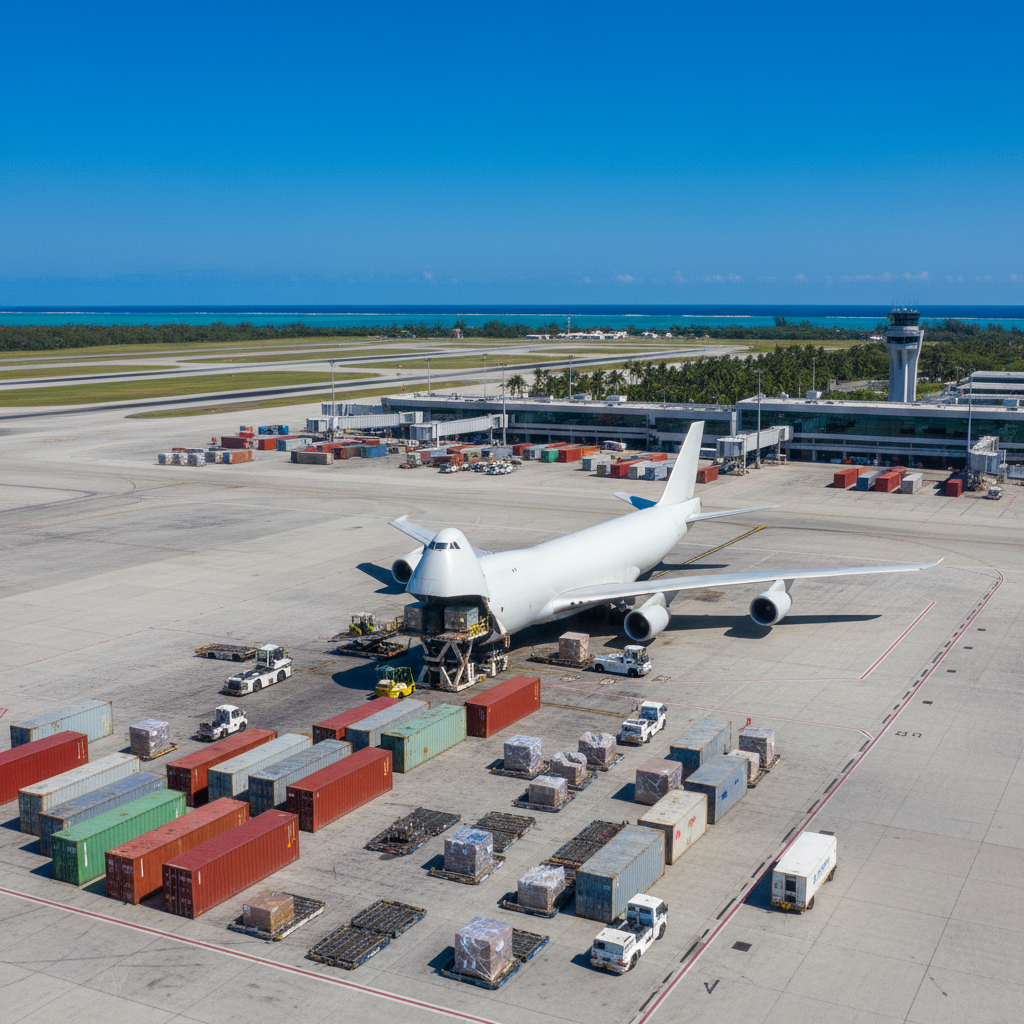
Cargo Ground Handling at Bali Airport (DPS)
Air freight handling, warehouse operations, and cargo logistics at I Gusti Ngurah Rai International Airport. Import, export, transit cargo — including perishables, pharmaceuticals, dangerous goods, and e-commerce shipments.
Tons/Quarter
International Freight
Annual Growth
Quick Answer: Cargo ground handling at Bali Airport (DPS) covers the complete air freight operations chain — from cargo acceptance, documentation, and security screening through warehouse storage, customs clearance coordination, and aircraft loading. DPS handles 78,000 tons of cargo per quarter with 70% being international freight. Bali Ground Handling provides SGHA Section 5 cargo services for standard freight, perishable goods (seafood, agricultural products), pharmaceutical cold-chain, dangerous goods (DGR-compliant), e-commerce shipments, and high-value cargo, serving both belly-hold operations on passenger aircraft and dedicated freighter movements.
Air Cargo at Bali Airport: Market Overview
I Gusti Ngurah Rai International Airport has emerged as a significant cargo hub in eastern Indonesia, handling 78,000 tons of cargo per quarter — with volumes growing at 9% annually. International freight accounts for 70% of total cargo volume, driven by Bali’s export economy (seafood, handicrafts, agricultural products, textiles) and the growing import demand from the island’s tourism and construction sectors.
The cargo landscape at DPS is evolving rapidly. E-commerce growth in Indonesia — the largest digital economy in Southeast Asia — drives increasing air freight demand for time-sensitive consumer goods. Pharmaceutical cold-chain requirements are expanding as Bali’s healthcare infrastructure develops. And the island’s premium export products (particularly seafood and specialty agricultural goods) require temperature-controlled, time-sensitive handling that commands premium freight rates.
Bali Ground Handling provides cargo ground handling services at DPS as SGHA Section 5, covering the complete freight operations cycle from acceptance through aircraft loading for exports, and from aircraft unloading through warehouse release for imports. Our DGR-certified team handles all cargo categories including standard freight, perishables, pharmaceuticals, dangerous goods, live animals, valuable cargo, and oversized shipments.
Export Cargo Handling
Export cargo processing at DPS follows a systematic chain: acceptance, documentation, security screening, storage, build-up, and aircraft loading. Our export cargo services begin with cargo acceptance — physical receipt of shipments at the cargo terminal with weight verification, dimension measurement, and condition inspection. We verify shipping documentation including air waybills (AWB), shipper’s declaration, customs export documents, and any specialized certificates (phytosanitary certificates for agricultural exports, health certificates for seafood, CITES documentation for regulated species).
Security screening follows DGCA and ICAO standards — all export cargo undergoes x-ray screening or physical inspection per the airport’s cargo security program. Our AVSEC-certified personnel manage the screening process in coordination with the airport’s security infrastructure.
Build-up operations prepare cargo for aircraft loading — organizing shipments into ULDs (Unit Load Devices) for wide-body aircraft or preparing bulk cargo for narrow-body belly-hold loading. Build-up considers aircraft loading limitations, cargo compatibility (no incompatible dangerous goods in the same container), weight distribution per load control instructions, and priority sequencing for time-sensitive shipments.
Bali’s primary export commodities handled through DPS include fresh and frozen seafood (tuna, prawns, lobster) requiring cold-chain management, handicrafts and artisan products (furniture, textiles, silver), agricultural products (coffee, spices, vanilla), and e-commerce returns and outbound shipments.
Import Cargo Handling
Import cargo processing reverses the export chain: aircraft unloading, breakdown, documentation, customs clearance coordination, storage, and release to consignee or freight forwarder. Our import handling includes aircraft offloading coordination with our ramp handling team, ULD breakdown and cargo sorting by consignee, documentation verification and customs broker coordination, bonded warehouse storage for cargo awaiting customs clearance, customs examination facilitation when physical inspection is required, and cargo release processing with delivery coordination.
Import cargo at DPS consists primarily of construction materials and equipment for Bali’s hotel and resort development sector, consumer goods for retail and hospitality industries, technology and electronics, automotive parts, and pharmaceutical and medical supplies.
Perishable Cargo Handling
Perishable cargo handling is a specialized capability that DPS’s agricultural export economy demands. Temperature-sensitive shipments — seafood, fresh produce, flowers, and food products — require specific handling protocols to maintain product integrity from acceptance to aircraft loading. Our perishable cargo service includes temperature-controlled acceptance areas and cold room storage, continuous temperature monitoring and documentation, priority processing to minimize time between acceptance and aircraft loading, cold-chain compliant build-up procedures, and specialized packaging verification per IATA Perishable Cargo Regulations (PCR).
Bali’s seafood export industry is a significant user of perishable cargo services at DPS, with fresh tuna, prawns, and lobster requiring strict cold-chain management for international markets in Japan, Australia, Singapore, and Hong Kong. Our handling protocols ensure that cold-chain integrity is maintained throughout the ground handling process.
Pharmaceutical & Cold-Chain Cargo
Pharmaceutical cargo handling requires the highest standards of temperature control and chain-of-custody documentation. Our pharmaceutical handling service at DPS provides GDP (Good Distribution Practice) compliant procedures, temperature-controlled storage with calibrated monitoring, documented chain-of-custody from acceptance to aircraft, specialized packaging verification (passive and active temperature control containers), and deviation management and notification protocols if temperature excursions occur.
As Bali’s healthcare infrastructure develops and Indonesia’s pharmaceutical distribution network expands, pharmaceutical cargo at DPS is a growing segment that requires handlers with documented cold-chain competence and audit-ready procedures.
Dangerous Goods Handling
Dangerous goods (DG) handling at DPS follows IATA Dangerous Goods Regulations (DGR) — the industry standard governing the acceptance, handling, storage, and loading of hazardous materials by air. Our DGR-certified team manages all nine DG classes: explosives (Class 1 — restricted), gases (Class 2), flammable liquids (Class 3), flammable solids (Class 4), oxidizers and organic peroxides (Class 5), toxic and infectious substances (Class 6), radioactive materials (Class 7 — with BAPETEN authorization), corrosives (Class 8), and miscellaneous dangerous goods (Class 9).
DG acceptance requires verification of proper classification, packaging, marking, labeling, and documentation (Shipper’s Declaration for Dangerous Goods). Our acceptance check process verifies each of these elements against the current edition of the IATA DGR before cargo is accepted into our warehouse system. Non-compliant shipments are rejected with documented notification to the shipper and airline.
E-Commerce & Rush Cargo
Indonesia’s e-commerce boom — the country is Southeast Asia’s largest digital economy — generates growing demand for air freight services at DPS. E-commerce cargo is characterized by high shipment volumes, small individual packages, time-sensitivity, and the need for rapid processing to meet delivery commitments. Our e-commerce cargo handling provides high-volume acceptance processing, automated documentation for bulk shipments, priority build-up and loading for time-sensitive e-commerce freight, and coordination with last-mile delivery partners.
Rush cargo service is available for shipments requiring expedited handling beyond standard processing timelines. Rush handling includes priority acceptance, immediate security screening, and first-available flight loading — ensuring that time-critical shipments reach their aircraft without standard warehouse dwell time.
How to Ship Cargo to Bali by Air
Shipping air cargo to DPS Airport involves several steps. First, engage a freight forwarder or directly contact an airline operating cargo-capable aircraft to DPS. Prepare all required documentation including commercial invoice, packing list, air waybill, and any commodity-specific certificates. Ensure packaging meets IATA standards for the specific cargo type. For dangerous goods, complete the Shipper’s Declaration and ensure packaging complies with DGR requirements. Cargo is processed through the origin airport’s cargo terminal, loaded onto the aircraft, and upon arrival at DPS, handled through our import cargo processing chain including customs clearance coordination.
Frequently Asked Questions: Cargo Handling DPS
How much cargo does Bali Airport handle?
DPS Airport handles approximately 78,000 tons of cargo per quarter, with 70% being international freight. Cargo volumes are growing at approximately 9% annually, driven by e-commerce, perishable exports, and pharmaceutical logistics.
What is the cargo handling rate at DPS Airport?
Cargo handling rates at DPS vary by cargo type, volume, and service level. Benchmark rates include export handling from Rp 1,760/kg and import handling from Rp 2,380/kg for standard cargo, with surcharges for rush handling, cold storage, and dangerous goods. Contact us for specific rate quotations.
Can you handle dangerous goods at Bali Airport?
Yes. Our DGR-certified team handles all nine IATA dangerous goods classes with proper acceptance checking, segregation, storage, and loading procedures. All DG shipments undergo verification against the current IATA DGR edition before acceptance.
Do you handle live animal cargo?
Yes. Live animal cargo is handled per IATA Live Animals Regulations (LAR), including verification of container specifications, ventilation requirements, feeding and watering arrangements, and species-specific handling protocols. CITES documentation is required for regulated species.
How do I track my cargo at DPS Airport?
Cargo status can be tracked through the airline’s cargo tracking system using the air waybill number. For shipments handled by Bali Ground Handling, our operations team provides status updates upon request and can coordinate with customs brokers on clearance progress.
Discuss Your Cargo Requirements
Professional cargo handling at DPS Airport for standard freight, perishables, pharma, and dangerous goods.
Complete Cargo Operations Ecosystem
Cargo handling integrates with multiple ground handling disciplines at Ngurah Rai Airport. Our ramp services ensure safe loading and unloading operations on the apron. For weight-critical operations, our load control and planning team calculates optimal cargo distribution. Fuel coordination adjusts uplift based on cargo weight configurations. Freight forwarders and logistics companies benefit from our dedicated cargo operator solutions. International shipments require customs clearance coordination, while our ground support equipment fleet includes cargo loaders, transporters, and dollies for every aircraft type.