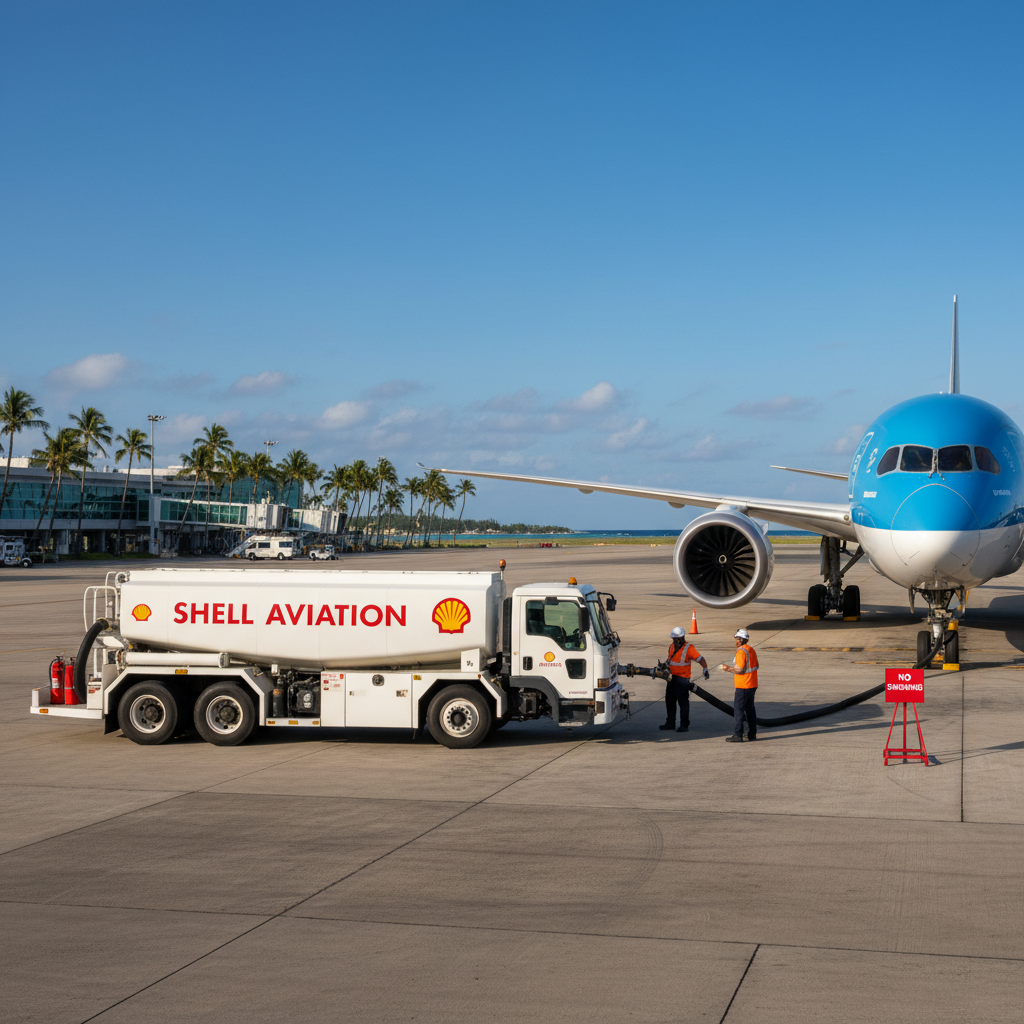
Aircraft Fuel Coordination at Bali Airport (DPS)
Jet-A1 fuel uplift management, delivery scheduling, quality verification, and bonded fuel arrangements at I Gusti Ngurah Rai International Airport. Coordinated fueling for commercial airlines, private jets, and charter operations.
Quick Answer: Bali Ground Handling coordinates aircraft fueling at DPS Airport through Pertamina Aviation, Indonesia’s primary aviation fuel supplier. Our fuel coordination service covers fuel quantity calculation and uplift optimization, delivery scheduling within turnaround windows, quality verification and documentation, bonded fuel arrangements for international operations, and defueling coordination when required for weight or maintenance purposes. Jet-A1 fuel is available 24/7 at DPS for all aircraft types from light jets to wide-body commercial aircraft.
Aircraft Fueling at DPS Airport
Fuel coordination is a critical component of aircraft turnaround operations — fuel represents the single largest operating cost for airlines (typically 25-35% of total operating expenses), and fueling is often the longest single activity in the turnaround sequence. At I Gusti Ngurah Rai International Airport, where turnaround efficiency directly impacts single-runway slot utilization, optimal fuel coordination balances three competing priorities: completing the fuel uplift within the turnaround window, ensuring the correct fuel quantity for the next sector, and maintaining fuel quality and safety standards throughout the process.
Bali Ground Handling provides fuel coordination as part of our comprehensive ground handling service at DPS. We do not sell fuel directly — Pertamina Aviation is the sole fuel supplier at DPS — but we manage the complete coordination chain between the airline’s fuel requirements and Pertamina’s delivery operations. This coordination role is essential because it ensures fueling is synchronized with all other turnaround activities rather than operating as an independent process that could create delays.
DPS Airport’s fueling infrastructure includes both hydrant fueling at selected stands (direct from underground fuel storage via hydrant dispensers) and tanker fueling at all stands. Our fuel coordination team manages the interface between the airline’s fuel order (quantity, timing, payment authorization) and Pertamina’s delivery dispatch, ensuring the correct fueling method and vehicle are positioned at the aircraft on schedule.
Fuel Uplift Management
Fuel uplift management begins with determining the correct fuel quantity for the next sector. Airlines typically communicate fuel orders through their flight operations or dispatch systems, specifying the planned uplift based on route distance, weather conditions, alternate fuel requirements, and company fuel policy. Our coordination team verifies the fuel order, converts it to Pertamina’s order format, and confirms delivery scheduling.
For private jet operations without dedicated dispatch departments, our team assists with fuel uplift estimation based on aircraft type, planned routing, and the operator’s fuel policy. We coordinate directly with the flight crew to confirm the final fuel order before delivery.
Fuel delivery at DPS is scheduled to align with the turnaround timeline — beginning after passenger disembarkation is complete (for safety) and completing before the final load sheet is issued. For narrow-body turnarounds, fueling typically takes 15-25 minutes; wide-body uplift may require 30-45 minutes depending on the quantity ordered.
Fuel Quality & Safety
Aviation fuel quality is governed by stringent international standards — ASTM D1655 for Jet-A1 specification, and a series of quality control checks from refinery to aircraft. Our fuel coordination role includes verifying Pertamina’s fuel quality documentation (Certificates of Quality) for each delivery, confirming that fuel vehicles have completed required quality checks before connecting to the aircraft, monitoring fueling operations for proper procedures (bonding, single-point or overwing connection, flow rate), and documenting the fueled quantity for load control weight calculations.
Fuel safety during the fueling operation requires specific precautions: fire safety equipment positioned at the aircraft, no passenger boarding or disembarkation during fueling at certain stand positions, bonding cables connected between the fuel vehicle and aircraft to prevent static discharge, and communication protocols between the fueling operator and flight crew. Our ramp supervision team ensures these protocols are maintained during every fueling operation.
Bonded Fuel & International Operations
International flights departing DPS benefit from bonded fuel arrangements — fuel supplied without Indonesian value-added tax (PPN), reducing the effective fuel cost for international operators. Our fuel coordination team manages the bonded fuel documentation requirements, ensuring that international flights receive tax-exempt fuel in compliance with Indonesian customs regulations. This is particularly valuable for private jet operators and charter flights where fuel cost optimization directly impacts the trip economics.
Private Jet Fuel at DPS
Private jet fueling at DPS follows the same Pertamina supply chain as commercial airline fueling, with our coordination team managing the specific requirements of business aviation. This includes smaller fuel quantities (typically 2,000-10,000 liters vs. 20,000-80,000 liters for commercial) requiring appropriate delivery vehicles, fuel credit arrangements (private operators may use international fuel cards such as UVair, World Fuel Services, or direct Pertamina contracts), and flexible delivery timing to accommodate private jet schedules that may not follow standard airline turnaround patterns.
For operators making technical stops at DPS (fuel-only stops without passenger disembarkation), we coordinate rapid-turnaround fueling that minimizes ground time — positioning the fuel vehicle before aircraft arrival and commencing fueling immediately after chocking.
Defueling Services
Defueling — removing fuel from an aircraft — may be required for weight reduction before departure on short sectors, maintenance requirements, or aircraft ferry operations. Our coordination team arranges defueling through Pertamina’s facilities, managing the logistics and documentation for fuel removal and storage or redistribution.
Frequently Asked Questions: Aircraft Fuel DPS
What type of aviation fuel is available at Bali Airport?
Jet-A1 fuel meeting ASTM D1655 specifications is available at DPS Airport, supplied by Pertamina Aviation. Jet-A1 is the standard fuel for all turbine-powered aircraft including commercial jets, business jets, and turboprop aircraft.
How much does jet fuel cost at Bali Airport?
Jet fuel pricing at DPS follows Pertamina Aviation’s published rates, which fluctuate with global oil markets. International operators benefit from bonded (tax-exempt) fuel pricing. Contact our operations team for current rate indications.
Can private jets refuel at Bali Airport?
Yes. Jet-A1 fuel is available 24/7 for all aircraft types including private jets. We coordinate fuel delivery through Pertamina and can arrange international fuel card payments (UVair, World Fuel Services) or direct Pertamina contracts.
How long does aircraft fueling take at DPS?
Fueling duration depends on the quantity ordered: 15-25 minutes for narrow-body aircraft, 30-45 minutes for wide-body, and 10-20 minutes for typical private jet uplift. Hydrant fueling (where available) is faster than tanker fueling.
Is fuel available for technical stops at DPS?
Yes. We coordinate quick-turnaround fueling for technical stops, pre-positioning fuel vehicles before aircraft arrival to minimize ground time. Technical stop fueling can be completed in as little as 20-30 minutes for standard uplift quantities.
Arrange Fuel Coordination
Professional fuel uplift management for all aircraft types at DPS Airport.